

An eHealth strategy for Ireland
Autor: Adrià G.Font / 24 October de 2017
24 October de 2017
The aim of the strategy is to provide an eHealth environment and to demonstrate how individual citizens and the health system benefit from it.
Elements that are assured with the correct introduction of eHealth:
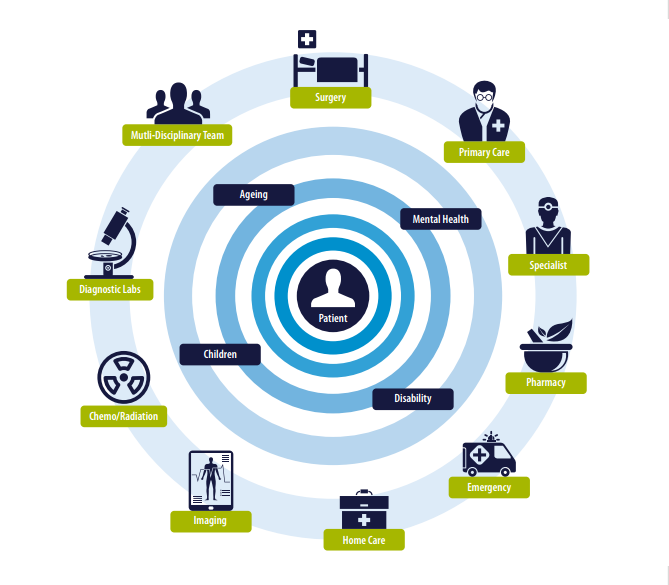
- Patients stand at the centre of the health system and become empowered participants in providing and investigating their health and well-being.
- The successful reformation of the health systems and the performance of structural and financial changes and planned services.
- The creation of efficiencies in the health service, including the optimal use of resources.
- The Irish health system can respond to the challenge defined by the “EU task force report – Redesigning health in Europe for 2020” to guarantee that in the future all EU citizens might have access to high-level healthcare in any place of the Union at a reasonable cost.
- The potential of eHealth as a promoter of economic growth and development.
The strategy identifies a series of objectives to be achieved and proposes a roadmap for their implementation in a results-based model. The strategy proposes a model of governance and structure of the health system and defines a series of actions to direct areas such as financing, resources or the participation of the parties concerned, amongst others, and also focuses on a set of priority projects in eHealth.
Background and Challenges
The Irish health system is changing radically due to different factors: demography, organisation and resources, the increased proliferation of technology and particularly the Internet. These factors indicate that the future health system will need to be radically different in order to efficiently and equitatively meet the expected demand. The demographic changes are occurring mainly as a result of the ageing populations, the increase in chronic disease and the increased demand and complexity of the health systems. These changes will bring forth many challenges to a system that is already tense and will require the use of innovative eHealth solutions financed by means of a realignment of the National health budget, increased investment in the health and management systems and process re-engineering and the implementation of support infrastructures.
What does eHealth offer?
While the concept of eHealth (Electronic Health) may be very new for many people in the health sector, the principles and practices that support it have been well documented for many years. This essentially includes the integration of all sources of information and knowledge that are part of the health service, using information technologies. A part is played by the patients and their records, the carers and their systems, sensors and monitoring apparatuses and administrative and management functions. It is an integrated chain that involves high level sharing and automation of the information. The main results are given below:
1. eHealth ensures that the empowered patient is at the core of the healthcare system.
2. It gives a better focus on the process from the diagnosis and treatment to the prevention and maintenance of a healthy lifestyle.
3. It provides more efficient and more secure systems of greater quality that are easier to access and allow greater transparency in their operation.
4. It assures that patients can receive safe healthcare in a high quality service environment.
5. The healthcare professionals have more time to come face-to-face with patients and can adapt better to individual needs.
6. It provides strategic management tools on all levels to ensure that the health resources can be used more efficiently and effectively.
7. A critical element to promote the change and the necessary transformation for introducing new healthcare models.
8. Business models that are fundamental for the structural reorganisation of the healthcare systems.
9. Significant returns on investment wherever eHealth is correctly implemented.
10. An investment in infrastructure in the future of Ireland not only for the transformation of the Irish health sector, but also for the general economy.
11. It offers the chance to obtain economic benefits through:
- The development of new business models providing business opportunities.
- The creation of new systems, technologies and skills that can be exported.
- It supports Ireland’s potential to draw on emerging eHealth markets thanks to its already strong industrial base in key areas like medical devices, ICT, Pharma / Bio and Financial Services.
Development of the Strategy
- The strategy was developed by means of a process that includes:
- Review of literature and publications of various academic and political organisations
- Review of industrial literature and cases of use including an assessment of the methodologies
- Analysis of international eHealth strategies and implementation of experiences
- Analysis of the potential economic benefits of eHealth
Fundamental Facilitators
The successful performance of an eHealth strategy has been shown to depend on the existence of a certain number of facilitators:
1. Will to reorganise and redesign existing work practices
2. Effective and authoritarian leadership and fostering of clinical “champions”
3. Availability of computer resources and development of skills in ICT and Health
4. Availability of standards-based technical and information infrastructures
5. Acceptance of a health identifier number for citizens, professionals and organisations
6. Appropriate legislation on privacy, security and data protection
7. Availability of secure identity and security in process management
8. Presence of an open and collaborative ecosystem with international links
Actions to achieve the strategic goals in eHealth
1. To ensure that eHealth is used to firmly place the patient at the centre of the system
2. To create the "eHealth Ireland" brand and to make it grow
3. Priority projects:
- Infrastructure for national identification in health
- Electronic prescription systems
- Online agenda
- Telemedicine and chronic diseases
- Personal Health Folder
- Online access to health information
- National patient portal
4. To develop specific lines of work:
- Appropriate models of financing for programs
- Management of change and adoption of processes
- Availability of computer resources and eHealth competencies
- Interoperable information systems
- Appropriate legislation on confidence, privacy, security and data protection
- Awareness-raising and public commitment
5. To develop an ecosystem in eHealth
6. Development strategies by actions that show the economic benefits of eHealth
7. Development of new strategic plans in eHealth
Conclusions
It is widely accepted that the successful performance of an eHealth strategy has the potential to transform the healthcare service systems into a more secure, more quality, more efficient environment that is easier to access. The general well-being of the population is enhanced through the adoption of information-based systems that give support to patient empowerment and a focus on prevention and well-being. Investment in eHealth also provides considerable potential for economic development, including the creation of employment, start-ups and more direct foreign investment. It has been proven that innovative and collaborative ecosystems are an important facilitator and that Ireland can play an international role in this area. The creation of “eHealth Ireland” and the successful implementation of the strategy in eHealth should be understood as an investment in national infrastructure. While the renovation of the health system is reinforced, it is ensured that Ireland can benefit from the potential of eHealth to improve the health and well-being of all of its patients/citizens, the work environment of its healthcare professionals, the efficiency and effectiveness of the services it gives and the achievement of significant economic development.
Download original PDF.