

Low complexity emergency visits drop by 11 percent at Arnau de Vilanova University Hospital thanks to an AI powered self triage tool
28 of January of 2026
Arnau de Vilanova University Hospital in Lleida has recorded an 11 percent reduction in low complexity emergency department visits one year after introducing an artificial intelligence based self triage tool. The findings come from a research study carried out by professionals from the hospital, the ERLab research group at the Biomedical Research Institute of Lleida, the Universitat Oberta de Catalunya (UOC) and the University of Lleida, and were recently published in the European Journal of Emergency Medicine.
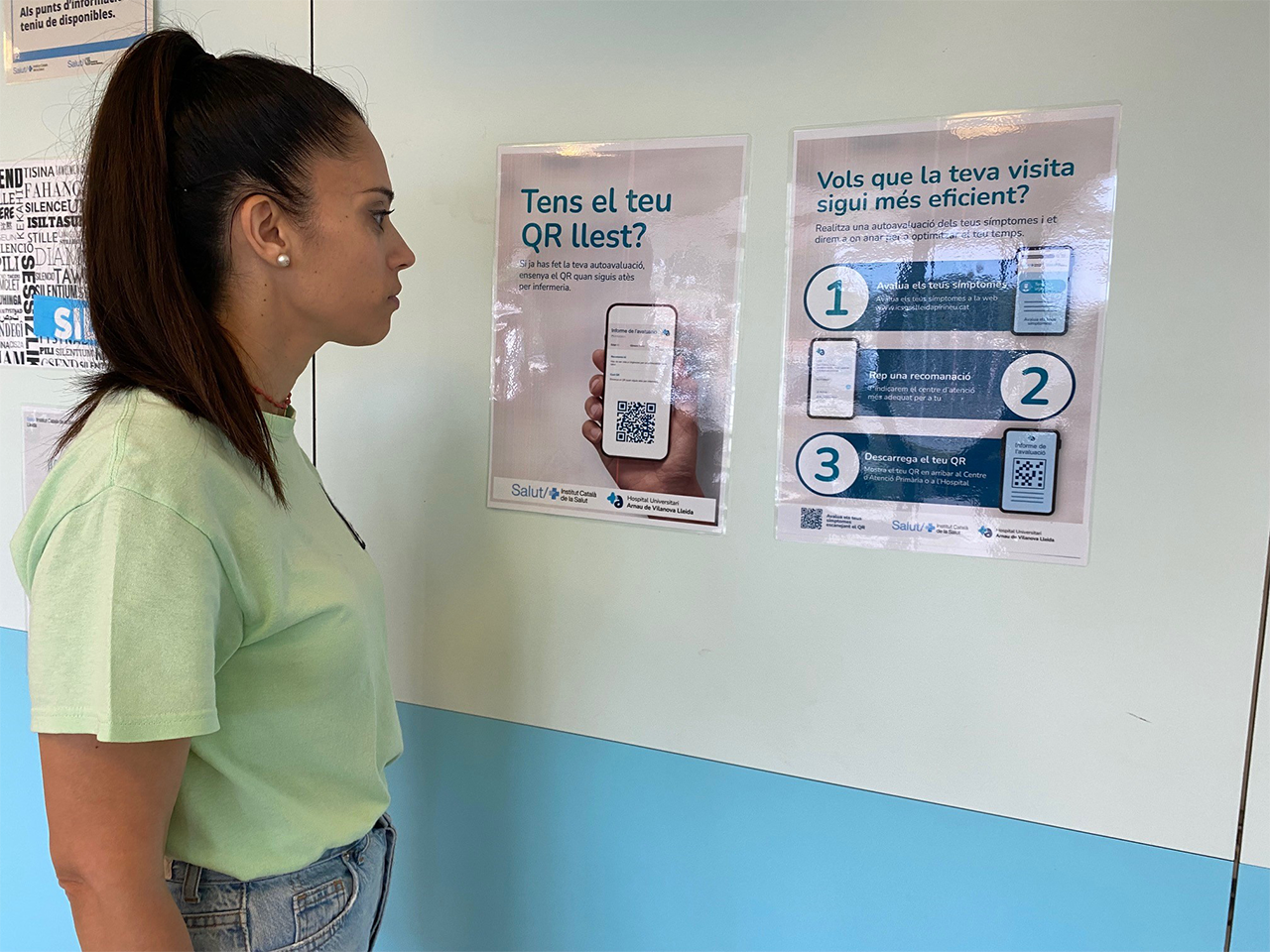
The tool, available through the hospital website and the Salut Lleida app, provides the public with immediate medical guidance based on their symptoms. After completing a short questionnaire, users receive a recommendation on the most appropriate healthcare resource, whether a Primary Care Emergency Centre (CUAP), their local primary care centre (CAP), or the hospital emergency department.
The study confirms that after three consecutive years of rising numbers of low complexity emergency visits, the 2024 to 2025 period shows a significant decline. Level V emergencies, the lowest complexity category, fell by 11.4 percent, while level IV cases decreased by 4.5 percent. Overall, low complexity visits at levels IV and V dropped by 6 percent, equivalent to 1,215 avoided visits over a four month period.
In total, the hospital treated 109,000 emergency cases in 2024, 49 percent of which were low complexity. This reduction is seen as a key indicator of improved organisational efficiency.
The AI based self triage tool was provided by Mediktor, with the collaboration of TIC Salut i Social Foundation and the UOC’s eHealth Center.
More than a thousand people guided to the right care option
During its first year of use, 1,035 people completed the self triage process using the tool. Of these, 43 percent were redirected to a CUAP, avoiding unnecessary trips to the hospital. Patients advised to attend the emergency department who arrive with the generated QR code are given priority during in person triage. At the same time, coordination with CUAPs has been strengthened to ensure a coherent and integrated emergency care pathway.
Arnau de Vilanova University Hospital is the first hospital in Spain to integrate an AI based self triage system into a winter contingency plan, with the aim of anticipating patient flows before they reach the emergency department. This approach contrasts with the traditional model of redirecting patients only once they are already in emergency care and has proven to be more efficient, user friendly and sustainable.
While this type of pre arrival guidance model is already well established in other European countries such as the United Kingdom, France and Switzerland, the Lleida experience stands out for its use of adaptive artificial intelligence, which is more flexible than the rigid algorithms commonly used in other systems.
The reduction in minor cases has eased clinical pressure and improved the hospital’s ability to respond to more serious conditions, while also offering the public clearer guidance and avoiding unnecessary waiting times and travel. The most common reasons for consultation among users of the tool were respiratory symptoms, headaches and viral illnesses.
-
The AI based self triage tool was provided by Mediktor, with the collaboration of TIC Salut i Social Foundation and the UOC's eHealth Center.