

Radiomics will make it possible to detect diseases before they cause symptoms
17 of October of 2024
Radiomics – the quantitative analysis of medical images – now makes it possible to offer more precise diagnoses and more detailed patient follow-up, and it is expected that in the near future it will pave the way for the implementation of treatments adapted to the individual characteristics of each patient (personalised medicine) and help in the early detection of disease, to the extent that some diseases may be detected before they show symptoms.
On 16 October Bellvitge Hospital, which has been a pioneer in the implementation of a general radiomics programme that will support up to 44 specific projects, hosted the conference Radiomics Project: Moving Towards Personalised and Precision Medicine, with the presence of prominent experts.
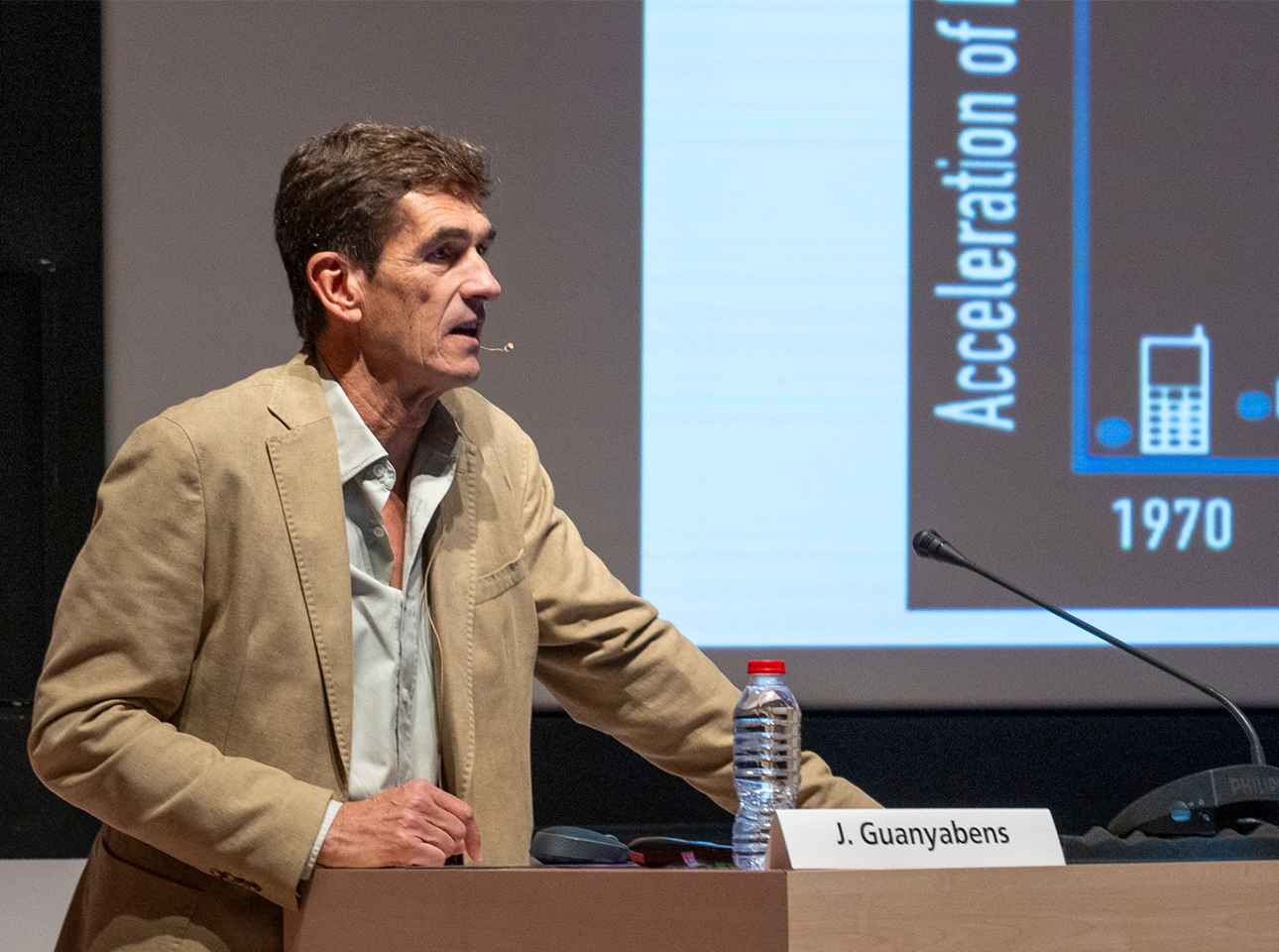
The conference had the participation of specialists in artificial intelligence, such as the director of the TIC Salut Social Foundation, Joan Guanyabens; representatives from the radiomics industry, such as Vicente Gómez de Terreros and Marcel Latina, from Canon Medical Systems; experts in digital transformation and medical imaging, such as Rafael Coronado and Ignacio Martínez Zalacaín; the territorial clinical director of diagnostic imaging at Bellvitge Hospital, Nahum Calvo; the head of the Diagnostic Imaging Service at Hospital de Sant Pau, Josep Munuera; neuroradiologists Pablo Naval and Albert Pons Escoda; Belén del Río, thoracic radiologist, and the specialist in nuclear medicine Laura Rodríguez Bel.
Pixel by pixel image analysis
Medical images (x-rays, magnetic resonances, CT scans, PET/CT scans…) play a key role in the diagnosis and treatment of most diseases. The traditional interpretation of these images by doctors was strictly visual. However, medical images, like television images, can be broken down into pixels that can be measured individually. This analysis provides additional information unseen by the human eye, such as whether a tumour is organised or disorganised, which can provide information about tumour aggressiveness, response to treatment, or disease prognosis.
As noted by Dr. Nahum Calvo, territorial clinical director of Diagnostic Imaging at the Bellvitge University Hospital, “radiomics is a new paradigm in the field of diagnostic imaging. Bioinformatics analysis of a large volume of patient data allows us to obtain image biomarkers that, through algorithms and the use of artificial intelligence, will be able to predict the evolution of cancer and other diseases.”
More than 40 projects
The Radiomics Programme of the Bellvitge University Hospital, financed with European FEDER funds, has started with the definition of 44 projects, led by 22 clinical specialists, who are looking for answers to the questions generated by doctors who are experts in different pathologies. These projects are gradually being launched. Some of those that are already in operation are the analysis of processes to assess brain tumours or the obtaining of prognostic biomarkers for multiple sclerosis, nasopharyngeal and oropharyngeal tumours, breast pathology, adrenoleukodystrophy, or the cerebrovascular disease.
One of the most advanced projects, the one related to multiple sclerosis biomarkers, has already made it possible to start a clinical project in which artificial intelligence intervenes to better assess the neurological impact of each patient and detect subtle changes before they manifest themselves in disability.
Nahum Calvo points out the generic focus of Bellvitge Hospital’s Radiomics Programme: “It has a global vision, not oriented to a specific type of pathology but to all specialisations as a whole; it is the framework that helps to develop specific projects and provides all the support so that they can be useful.”
Calvo also underscores the close collaboration with the industrial sector: “We have formed multidisciplinary teams that bring together various profiles, including engineers, physicists and other specialists. We work hand-in-hand with companies like Canon Medical Systems, not only to ensure we have the most appropriate technology platforms for each project, but also to collaborate directly with industrial innovation teams.”
He concludes that this relationship “allows us to be part of the core of technological innovation, mobilising the hospital’s best resources and co-creating with industrial partners projects that generate knowledge.”