

Primary care professionals providing home care report positive results from the portable electrocardiogram connected to the 5G case
16 of December of 2025
TIC Salut i Social Foundation and the i2cat research centre have presented the results of a pilot project at the Flix primary care centre, which tested a home care case equipped with an electrocardiogram, a portable ultrasound scanner and 5G technology. The five month study, carried out by professionals from the Flix primary care centre of the Institut Català de la Salut (ICS), shows that the initiative enables healthcare to be delivered at home to older people and complex chronic patients in rural areas, reducing the need for travel and optimising healthcare resources.
Devices in the 5G case
The pilot focused on two devices included in the home care case available at ICS centres: a portable electrocardiogram and an ultrasound scanner. They were selected because they allow diagnostic test results to be directly integrated into the primary care centres electronic clinical record system, called eCAP, provided a stable connection is available.
To overcome connectivity limitations in rural areas, where coverage often lags behind that of metropolitan zones, a communications backpack was deployed. The system aggregates signals from multiple mobile network operators, boosting bandwidth and connection resilience while improving the speed and reliability of data transmission. This enables real time sharing of diagnostic results from the case with primary care information systems.
Pilot results
The pilot was conducted between June and October 2024 and involved 14 older patients, some of whom were classified as Complex Chronic Patients. All participants received healthcare at home from professionals of the Flix primary care centre. From a clinical perspective, professionals highlighted improvements in connectivity, data recording and access to clinical information, which helped streamline home visits and enabled remote analysis of electrocardiograms, avoiding unnecessary patient travel. They also valued the ability to share information in real time from patients homes with staff at the primary care centre.
Areas for improvement were also identified. Further work is needed to ensure reliable communications and simplify connection to eCAP, as the current process can limit use in urgent situations. In addition, professionals noted that integrating data from the ultrasound scanner required a VPN, which hindered on site integration of information.
Patients, meanwhile, reported high levels of satisfaction with the use of technology during home visits and perceived a clear improvement in the quality of care received.
Advantages of the 5G network in telemedicine
The Terres de l’Ebre Health Region is the least populated in Catalonia, with a population density of just 56.7 inhabitants per square kilometre. Predominantly rural, it is made up of numerous small municipalities. This dispersed population means that healthcare centres are few and often located far from where people live, requiring both patients and healthcare professionals to travel long distances.
Against this backdrop, 5G technology offers significant potential for the development of telemedicine. It enables the integration of innovative technologies into care delivery, supports the remote monitoring of clinical variables, improves communication between professionals and patients, allows the transmission of high resolution medical images, and opens the door to new medical devices, IoT based patient monitoring tools and advanced robotic applications.
Following the completion of the pilot, the TIC Salut i Social Foundation has begun exploring further telemedicine initiatives in the region, with the aim of continuing to enhance care delivery and improve patients quality of life.
-
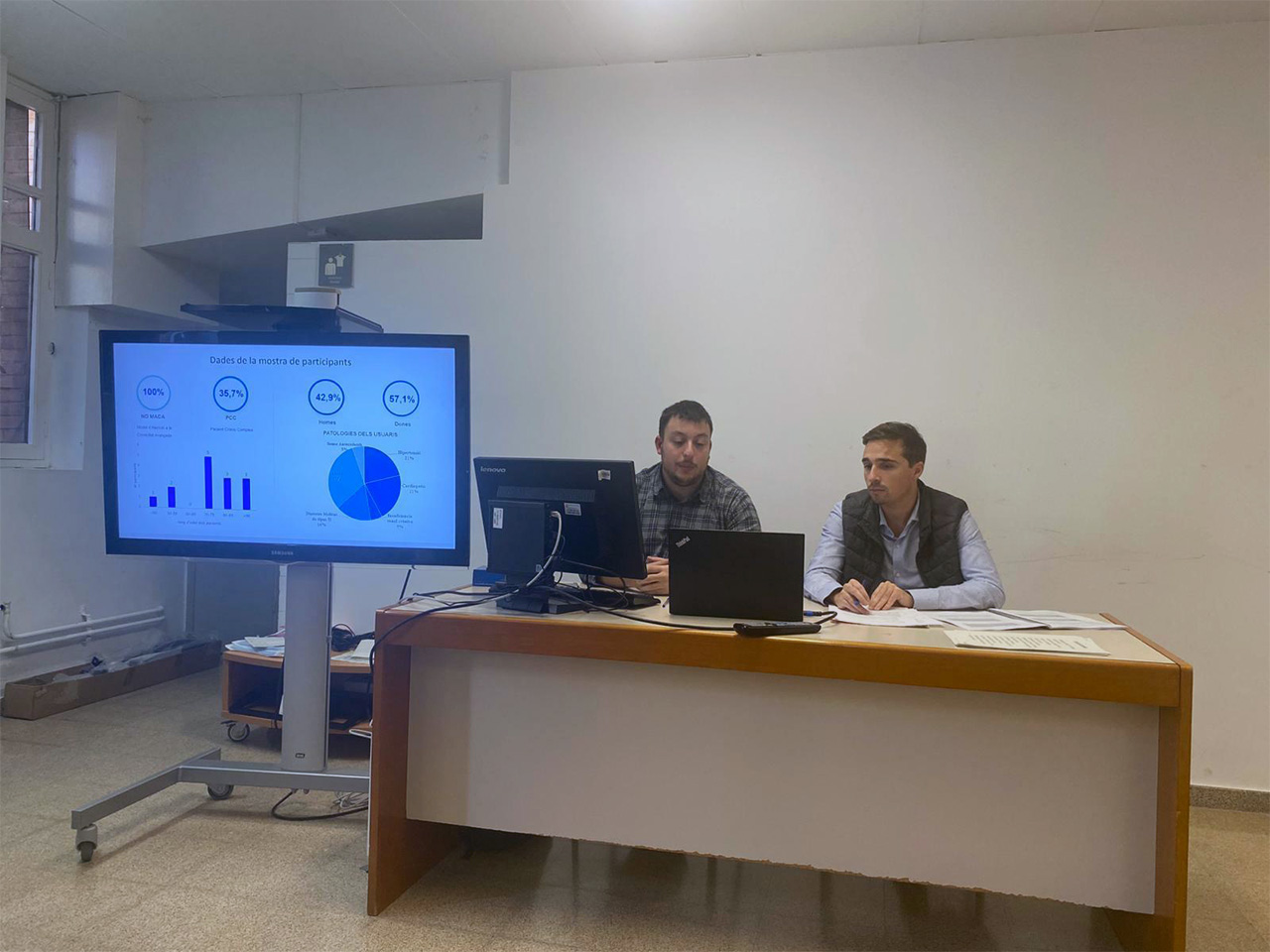
The TIC Salut i Social Foundation and i2cat have presented the results of a pilot study on the use of a home care case equipped with 5G connectivity, carried out over five months by medical and nursing professionals from the Flix primary care centre.