

A solution that transforms emergency department discharge summaries into personalized patient guides wins GenAI Health Hack 2026
24 of February of 2026
Team Bridge has won the GenAI Health Hack 2026 with EdxPlain, a solution designed to transform emergency department discharge summaries into personalised, easy-to-understand guides for patients.
The second edition of the GenAI Health Hack brought together more than 90 professionals from clinical, technology, scientific, and institutional backgrounds in Barcelona this week, united by a common goal: transforming the healthcare system through generative artificial intelligence.
The event was led by Hospital Clínic Barcelona, the Health/AI Program of the Department of Health of the Government of Catalonia, and the Chair of Precision Oncology at the University of Barcelona, in collaboration with MIT Critical Data. It took place from February 19–21, beginning with an opening conference session at the Hotel SB Icaria, followed by the hackathon hosted at NTT DATA’s Barcelona offices.
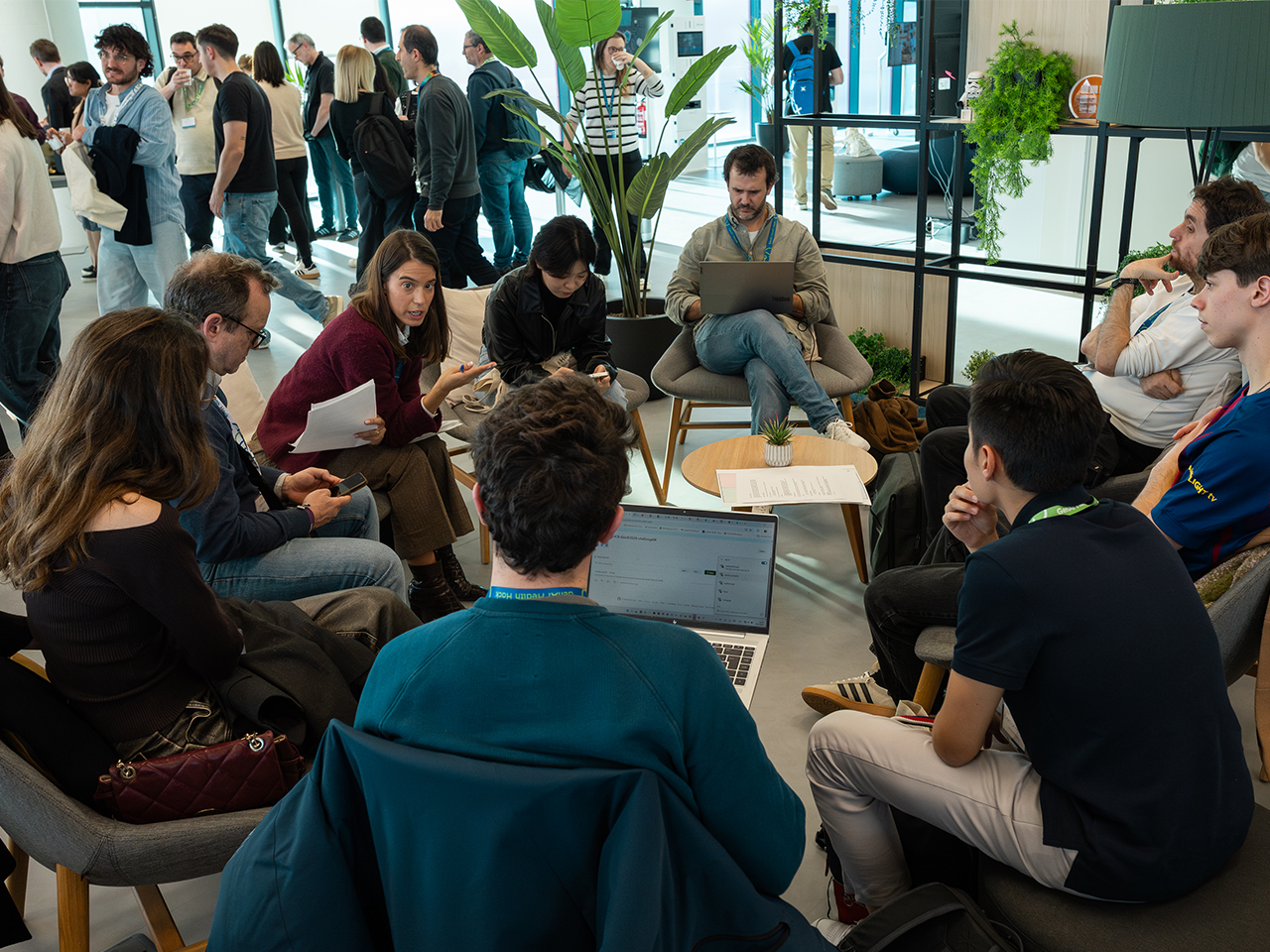
Over three intensive days, 14 multidisciplinary teams worked on designing and prototyping generative AI and multi-agent system solutions to address specific healthcare challenges, ranging from clinical workflow optimisation and data management to decision support and patient education.
Beyond technological innovation, projects were evaluated on scientific rigor, feasibility, real-world impact in care settings, regulatory compliance, and bias mitigation—underscoring a strong commitment to responsible, human-centered AI.
Organizers emphasized that the GenAI Health Hack reinforces a collaborative innovation model focused on delivering tangible improvements to the healthcare system. “Generative AI opens extraordinary opportunities to improve processes, optimise resources, and enhance quality of care. However, its true value depends on rigorous scientific validation, human oversight, and a firm commitment to ethics and public service,” they noted.
Award-Winning Projects and Real-World Impact Solutions
The first prize of this second edition was awarded to EdxPlain, developed by Team Bridge, for its proposal to transform emergency department discharge summaries into personalised, patient-friendly guides.
The project was created to close the communication gap between clinicians and patients by translating technical emergency department documentation into clear, actionable guidance. By tailoring medical instructions to each individual, the team aims to empower patients to take a more active role in managing their health.
During the semifinal round, judges focused on technical robustness, clear performance evidence, ethical responsibility, and potential impact. The final winner was selected through a popular vote by all hackathon participants.
The winning team included Aina Fuentes Camacho and Anastasia Ganshof (Bachelors of life sciences engineering students), David Cubero Valentín (Data Scientist & Analyst at Vall d’Hebron), Jaime Pineda (Emergency Doctor at HM Hospitales), Laia Raja Gubau (Biomedical engineering student), and Micaela Izbicki (Attorney at Cuatrecasas), with mentorship from Miguel Ángel Armengol de la Hoz (Head of the Data Science Lab at the Progress and Health Public Foundation, Andalusian Ministry of Health and Consumer Affairs) and support from Beatriz López Barbeito (Head of Emergency Department Section at Hospital Clínic Barcelona), Alejandra Losada Parente (Nursing Coordinator at Hospital Clínic Barcelona), and Ligia Bustamante Torneiro (Nursing Coordinator at Hospital Clínic Barcelona).
Two additional finalist projects were also recognized:
- Image Cross-Modality, a solution that generates additional MRI sequences from an initial image, potentially reducing scan time for patients. In its current primary application, the system produces synthetic datasets to optimize the training of new AI models in medical environments.
- Dry Weight Prediction, a project that uses artificial intelligence to calculate optimal dry weight for patients undergoing dialysis, improving treatment precision. Through personalized therapy adjustments, the system significantly reduces medical complications that often occur during dialysis sessions.
Reimagining the Future of Healthcare Delivery
The opening conference brought together internationally recognised voices to examine AI’s transformative role in healthcare. Institutional remarks were delivered by Tobías Martínez, President of the Governing Board of Hospital Clínic Barcelona; Toni Berenguer, Head of AI at the TIC Salut i Social Foundation; and Xavi Borrat, Head of the Clinical Informatics Department at Hospital Clínic Barcelona.
Among the keynote speakers, Leo Anthony Celi, Senior Research Scientist at MIT Critical Data, discussed the need to reimagine healthcare systems in the age of AI. Experts from NTT DATA, Logicalis, and Avvale explored the real-world deployment of platforms, intelligent agents, and multi-agent systems under human supervision.
Panel discussions focused on critical issues for the healthcare sector, including secure data sharing, interoperability, trust and professional accountability in AI-assisted care environments, and the development of augmented capabilities for healthcare professionals.
This strategic perspective reinforces the GenAI Health Hack’s positioning as not only a hub for technological innovation, but also a forum for systemic reflection on the future of care delivery models.
An Open Ecosystem for Responsible AI in Healthcare
The GenAI Health Hack 2026 marks another step forward in consolidating a collaborative ecosystem among public institutions, hospitals, universities, research centers, and the technology industry, with the goal of generating sustainable, scalable solutions for the healthcare system.
This year’s edition was supported by NTT DATA, Avvale, Logicalis, Lillis, Vodafone, SIRT, and Palo Alto—companies committed to digital transformation and responsible innovation in healthcare.
Following the success of its inaugural edition in 2024, the GenAI Health Hack is now established as a leading biennial event dedicated to advancing rigorous, ethical generative AI with measurable impact on patient care and healthcare system efficiency.
-
More than 90 professionals, organised into 14 multidisciplinary teams, developed generative AI–based solutions to address real-world challenges in Catalonia’s healthcare system.