

The rollout of the critical care model for the Girona Region includes a semi-critical care unit at Figueres Hospital
28 of September of 2026
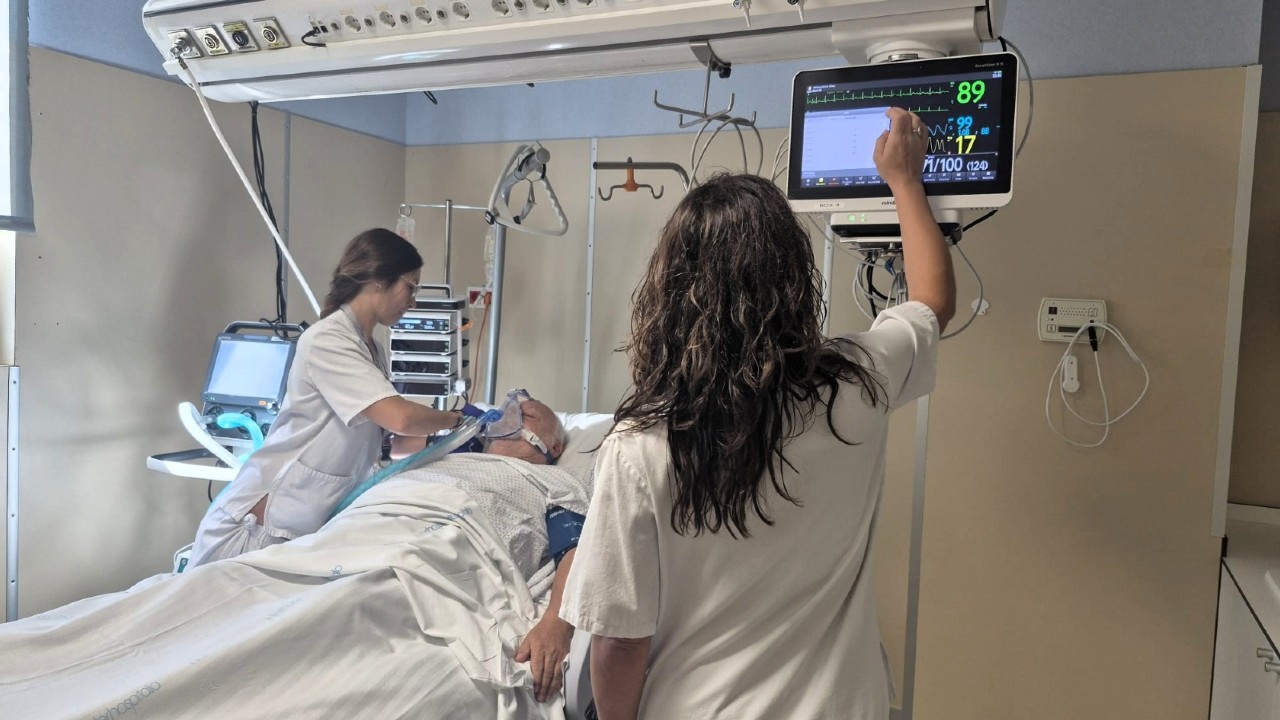
The Semi-Critical Care Unit at Figueres Hospital caters to both seriously ill patients who do not require admission to an intensive care unit and those continuing their hospital stay after being discharged from the ICU at Trueta-Santa Caterina or the Cardiovascular Critical Care Unit at Trueta. Consequently, this allows such patients to be hospitalized at a facility closer to home—offering associated benefits—while ensuring complete clinical safety.
The semi-critical care unit at this Alt Empordà facility is located within the Emergency Department, occupying the space previously used by the Monitoring Unit (UMO). The project involved upgrading this unit through facility adaptations, the installation of advanced technology, and direct coordination with the Girona Territorial Critical Care Unit.
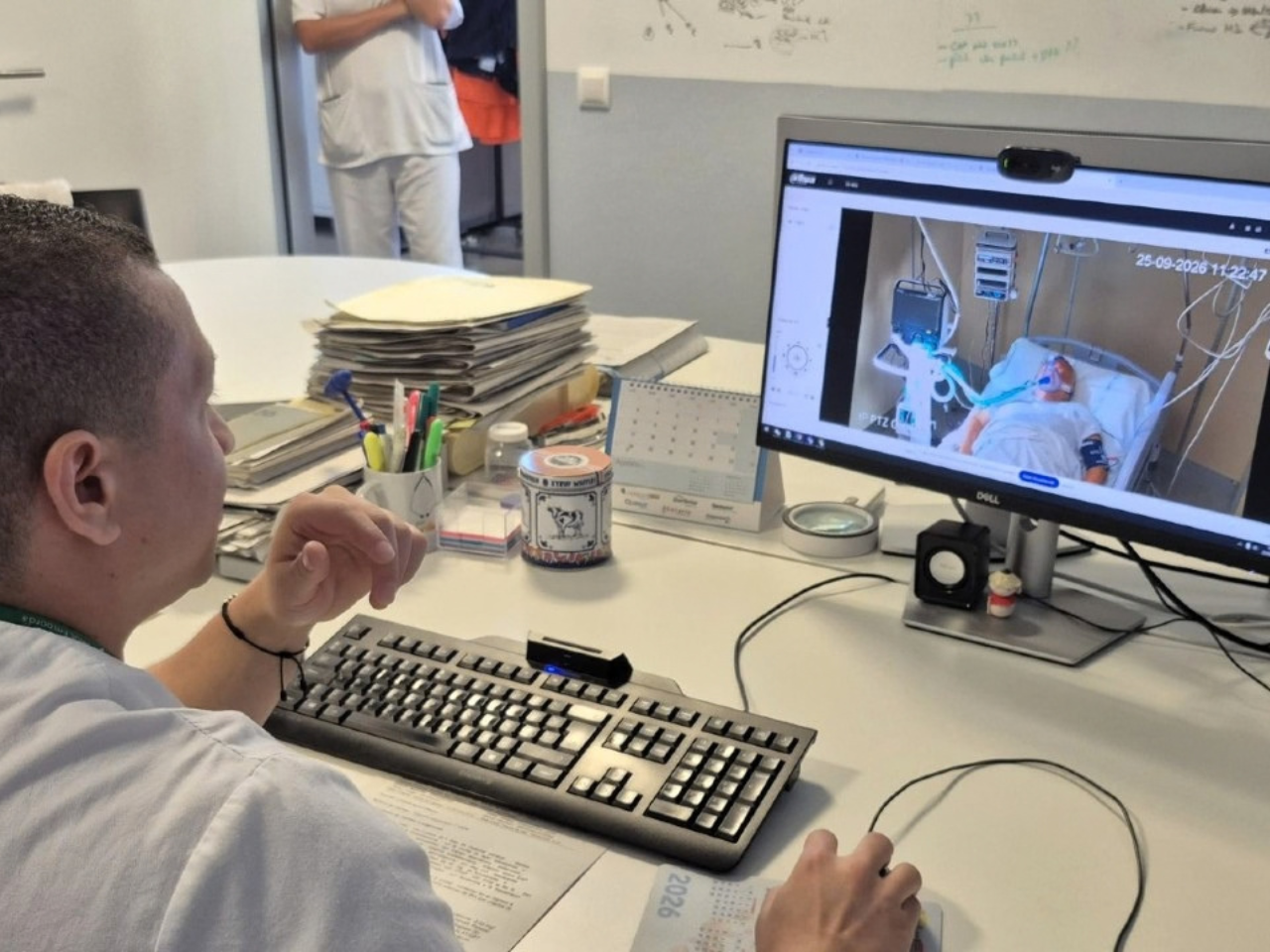
The new Figueres unit operates 24 hours a day, 365 days a year, staffed by an enhanced team of healthcare professionals who have undergone intensive training and preparation for the care of this type of patient. Additionally, these professionals will receive support from specialists at Trueta and Santa Caterina hospitals via a new technology platform, as part of the Critic.CAT project.
Critic.CAT facilitates the real-time transfer of information and knowledge among the centers and professionals involved in the care of critical and semi-critical patients (referral hospitals, local hospitals, and the SEM emergency medical service). It also contributes to improving decision-making, resource-use efficiency, and territorial equity in the care of critically and semi-critically ill patients—both general and cardiac—in the Girona Region.
Jaume Heredia, manager of the Girona Health Region, expressed his satisfaction, noting that “the implementation of this model allows patients admitted to local hospitals to receive care at a level similar to that provided to patients in the ICU at Trueta-Santa Caterina. Since September 14, when the Figueres Semi-critical Care Unit was launched, five cases have been identified involving patients who would have had to be transferred to Girona had this unit not existed.”
For his part, Xavier Verdaguer, Managing Director of the Salut Empordà Foundation, expressed his gratitude for “the tremendous work done by the professionals to bring this project—part of the Critic.CAT initiative—to fruition.” He also highlighted that “this model avoids duplication, ensures more efficient resource use, and improves proximity and accessibility for patients. It is a networked service that represents a qualitative leap forward for the population of Figueres and the Alt Empordà region.“
Finally, Olga Mesquida, Director of the Emergency Department at Figueres Hospital, highlighted “the work of territorial coordination to ensure cross-disciplinary and continuous training for the entire clinical team, enabling us to offer the best possible response to patients admitted to Figueres Hospital. In our case, the Semi-critical Care Unit evolved from what was previously the Monitoring Unit, and this change has also allowed us to increase our staffing levels.”
Important coordination task
This new care model aims to improve the delivery of intensive care services across the entire region through the coordination and collaboration of professionals from various hospitals, supported by digital tools. Implementing this new model has required essential coordination among the professionals involved across the different centers—spanning both medical and nursing staff—as well as with the SEM (Medical Emergency System) and information systems technicians, particularly regarding the technological aspects.
Significant increase in beds, closer to patients’ homes
En les properes setmanes, el projecte de la Regió Sanitària Girona continuarà avançant amb l’obertura d’una Unitat a l’Hospital d’Olot i, al llarg del 2027, també s’implementarà a l’Hospital Sant Jaume de Calella. Un cop acabat el desplegament del model d’atenció al pacient crític i semicrític, a la Regió Sanitària Girona s’haurà passat de 12 llits de semicrítics generals a 44 arreu del territori (vuit als hospitals de Santa Caterina, Palamós i Figueres, quatre a Olot i 12 a la Corporació de Salut Maresme i la Selva -hospitals de Blanes i Sant Jaume de Calella-, a més de quatre al Trueta), i de 27 llits de medicina intensiva per a pacients crítics a tenir-ne 39, ja que s’ampliarà l’UCI del Trueta en 12 llits més. A banda, també hi ha els llits de crítics i semicrítics d’altres especialitats, com neurologia, cardiologia, neurocirurgia, anestèsia o pneumologia, entre d’altres.
Amb el projecte, a Girona es millorarà la coordinació entre els centres hospitalaris per optimitzar la gestió dels pacients adults crítics i semicrítics, s’adequaran els recursos assistencials per atendre millor aquest tipus de pacients tenint en compte les necessitats de la població. A més, aquest desplegament es farà d’acord amb la situació actual, que alhora servirà de base per a l’escenari del nou Campus de Salut, en què hi haurà un servei de crítics en un sol centre que donarà suport a una xarxa de serveis de semicrítics a la resta del territori.
El nou model permetrà incrementar els llits estructurals, reduir els trasllats de pacients crítics fora de la Regió Sanitària de Girona (que actualment és d’unes 60 persones a l’any), millorar l’equitat territorial, atendre els pacients més a prop del seu domicili i amb el recurs que més s’ajusti a les seves necessitats assistencials, a més de millorar els fluxos entre els hospitals.
El Critic.CAT està impulsat pel Departament de Salut i el CatSalut, i coordinat per la Fundació TIC Salut i Social.
Font: Departament de Salut
-
El Critic.CAT està impulsat pel Departament de Salut i el CatSalut, i coordinat per la Fundació TIC Salut i Social.